The problem
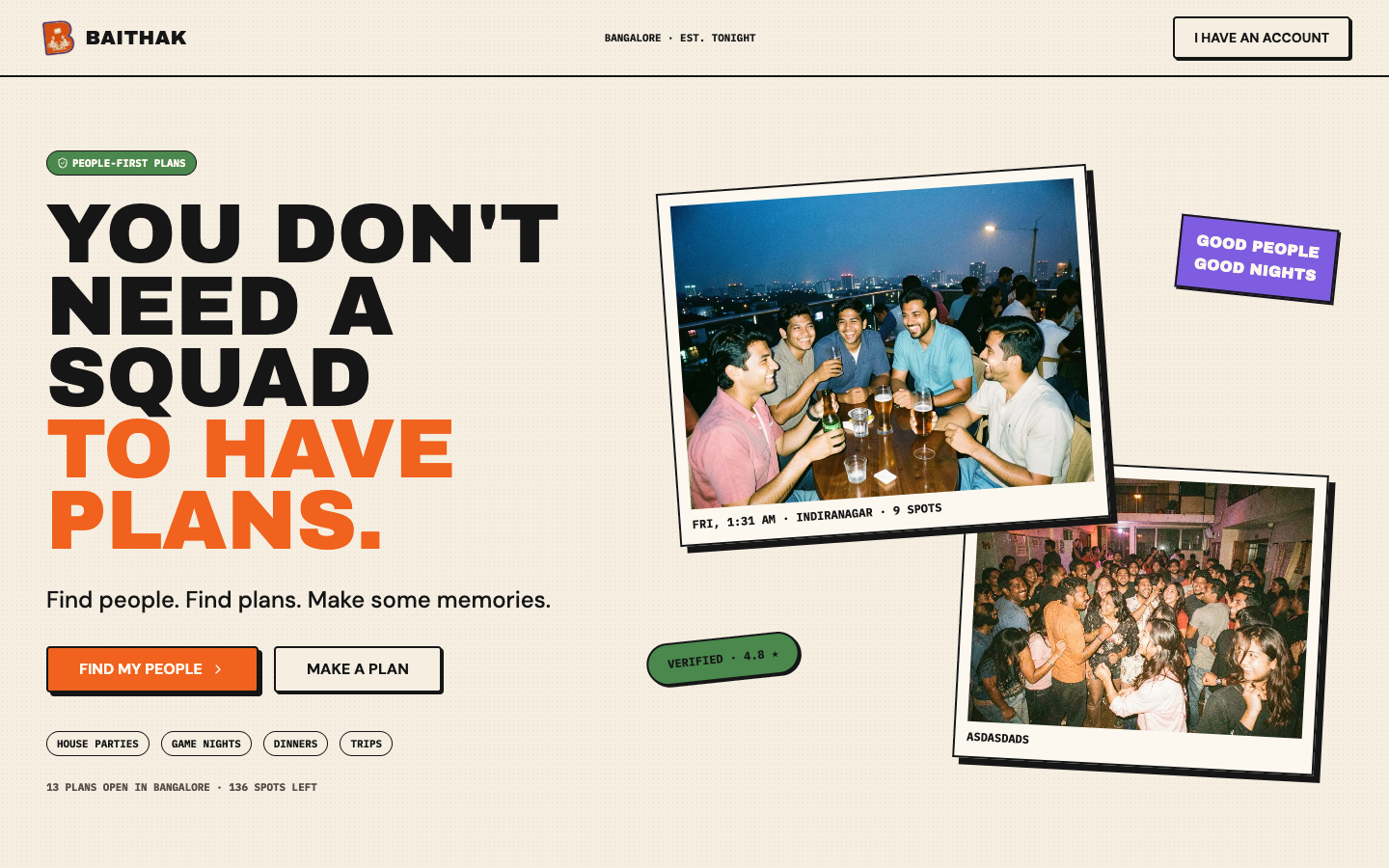
There are two people with the same problem, standing on opposite sides of it.
Guests want to do something this weekend but don't have a group — and nobody wants to blindly show up at a stranger's house.
Hosts get flooded with DMs from strangers, with no good way to tell who's genuine, who fits the vibe, or how to balance the group without manually vetting fifty people.
Event apps solve ticketing. This isn't a ticketing problem. It's a trust problem.
Events are the surface. People and trust are the product.
What I set out to build
A loop, not a listing page. Every screen had to move someone one step along it:
- Discover a plan, understand the host, see the crew and why you might vibe
- Request to join — the host reviews, accepts, and a Party Room opens
- The crew chats before the event, so nobody walks in as a stranger
- Meet in real life, share memories, leave reviews — which feed back into trust
First sketch: the schema
Before writing any code I drew the data model on a whiteboard — every table had to earn its place by powering a step of the loop.
The core is small: a Plan has a host, a set of Applications from people who want in, and PlanAttendee rows once the host says yes. Around it sit the trust pieces — Review, Connection (a mutual "we'd hang out again"), Block, Report — and the social ones: Message for the Party Room, Photo for memories, Notification to close the loop.
Architecture decisions
Design
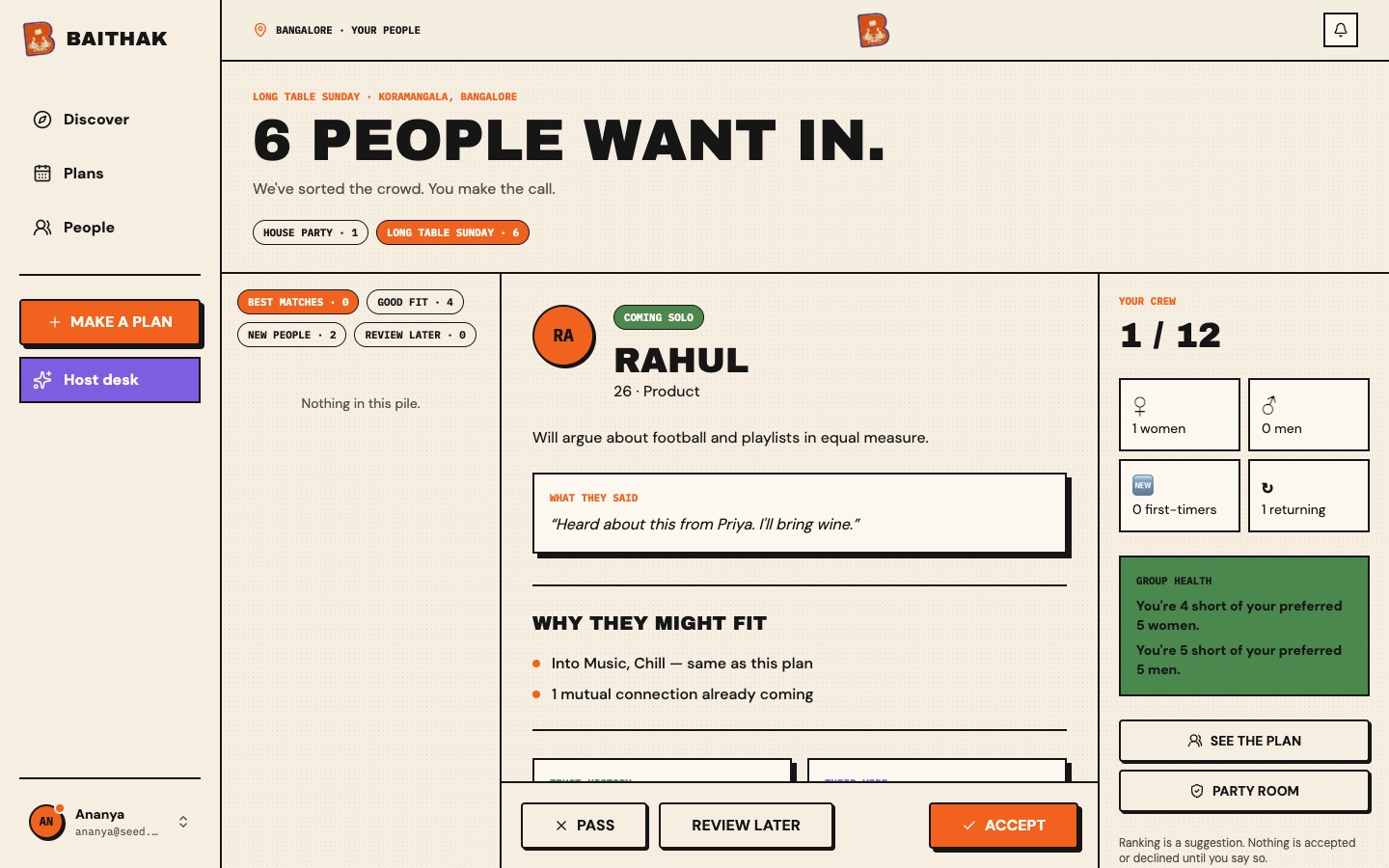
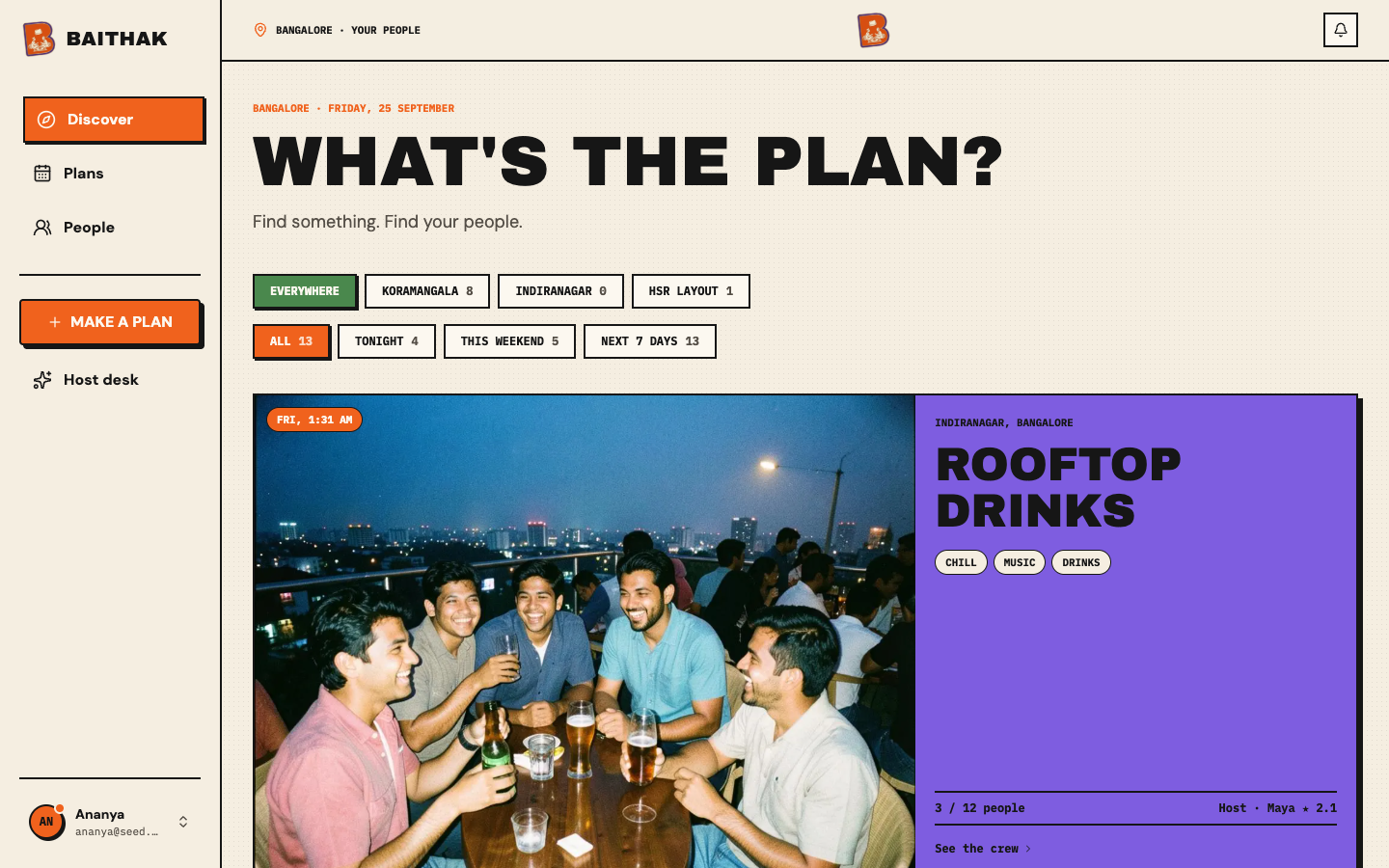
The brief was retro social club × modern web app: editorial type, party-flyer layouts, chunky borders, stamps and Polaroid memories — with interaction design underneath that's as polished as anything current. Retro is the visual language, not a UX regression.
- Type in three roles: Archivo Black for moments ("WHAT'S THE PLAN?"), DM Sans for the interface, IBM Plex Mono for metadata lines like
12 / 16 PEOPLE. - Colour with rules: cream canvas, near-black ink, orange only for primary actions, purple for play, green only for trust.
- Copy that sounds human: "The crew", not "Attendees". "Request to join", not "Register". "You're in ✓", not "Registration successful".
Tech stack
- Next.js 16 (App Router) for both apps, in a Turborepo monorepo with shared types and config
- PostgreSQL + Prisma — 16 models, versioned migrations, a seed with realistic fake plans
- Better Auth — self-hosted email + password with database sessions
- Supabase Storage — photos go browser → storage through signed URLs, never through my server
- Tailwind v4 with a small design system:
paper-card, hard offset "stamp" shadows, a stamp-in animation for "You're in ✓"
What's next
Honest status: the full loop works end to end against real Postgres, from discovering a plan to reviewing the night after. Before a public launch it needs a moderation queue for reports, email verification and password reset, and a realtime transport for the Party Room once polling stops being enough.